
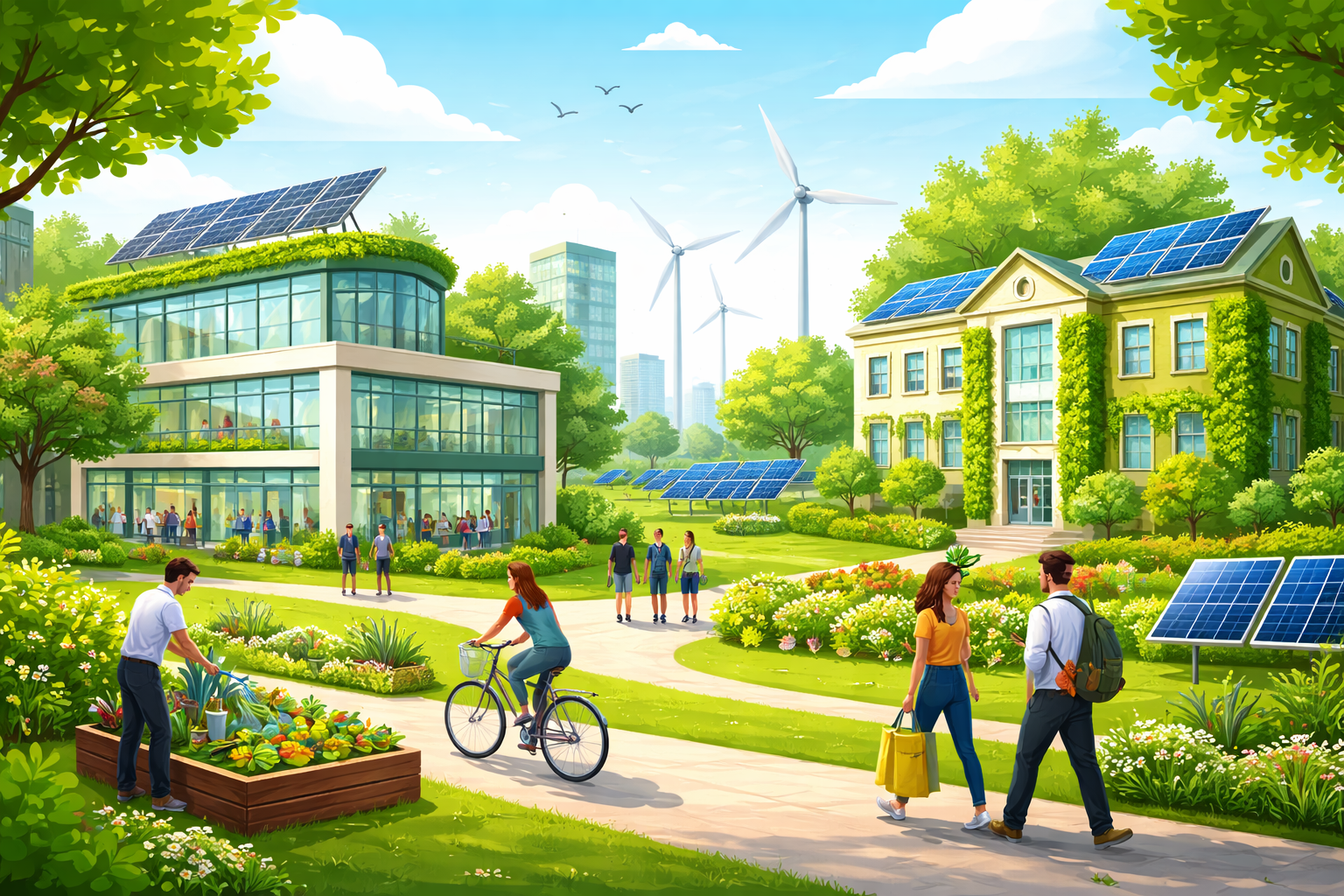
In an era where environmental challenges are becoming increasingly urgent, the role of institutions and organizations in promoting sustainability has never been more important. Green campuses and workplaces are not just trends—they are powerful movements that reflect responsibility, innovation, and long-term vision. Eco-conscious institutions are leading by example, showing how sustainable practices can create healthier environments, reduce costs, and inspire communities.
What Are Green Campuses and Workplaces?
Green campuses and workplaces are environments designed and operated with sustainability at their core. This includes energy-efficient infrastructure, reduced carbon footprints, responsible waste management, and a culture that encourages environmentally friendly habits.
From universities adopting renewable energy systems to offices implementing zero-waste policies, these institutions are reshaping how we think about productivity and environmental responsibility. The focus is not only on infrastructure but also on behavior—encouraging individuals to adopt greener lifestyles.
Why Sustainability Matters in Institutions
Institutions play a significant role in shaping society. When they adopt eco-friendly practices, they influence students, employees, and communities to follow suit. Sustainability in campuses and workplaces leads to:
- Reduced environmental impact
- Lower operational costs through energy efficiency
- Improved health and well-being of occupants
- Enhanced brand reputation and credibility
By prioritizing sustainability, organizations contribute to global efforts in combating climate change while also creating more efficient and productive environments.
Key Features of Green Campuses and Workplaces
1. Energy Efficiency and Renewable Energy
One of the most impactful steps is the use of renewable energy sources such as solar and wind power. Installing solar panels, using LED lighting, and optimizing energy consumption through smart systems significantly reduce energy costs and emissions.
2. Sustainable Infrastructure
Green buildings are designed with eco-friendly materials, proper insulation, and natural ventilation systems. These features not only reduce energy usage but also create comfortable and healthy indoor environments.
3. Waste Management and Recycling
Effective waste segregation, recycling programs, and composting initiatives help reduce landfill waste. Many institutions are now moving toward zero-waste goals, ensuring minimal environmental impact.
4. Water Conservation
Rainwater harvesting, low-flow fixtures, and water recycling systems are essential practices that conserve water and reduce wastage.
5. Green Mobility
Encouraging cycling, carpooling, and the use of electric vehicles helps reduce carbon emissions. Many campuses are now designed to be pedestrian-friendly, promoting healthier and greener commuting options.
The Role of Technology in Sustainability
Technology plays a crucial role in enabling sustainable practices. Smart energy management systems, IoT-enabled devices, and data analytics help monitor and optimize resource usage. Digital transformation also reduces the need for paper, supporting eco-friendly operations.
Workplaces that embrace technology not only become more efficient but also significantly reduce their environmental footprint.
Building a Culture of Sustainability
Infrastructure alone is not enough—creating a culture of sustainability is equally important. This involves:
- Conducting awareness programs and workshops
- Encouraging employees and students to adopt eco-friendly habits
- Promoting digital workflows to reduce paper usage
- Recognizing and rewarding sustainable initiatives
When individuals feel responsible and empowered, sustainability becomes a shared mission rather than a policy.
Benefits Beyond the Environment
Green campuses and workplaces offer benefits that go beyond environmental protection:
- Healthier Spaces: Improved air quality and natural lighting enhance well-being
- Higher Productivity: Comfortable environments boost focus and efficiency
- Cost Savings: Reduced energy and water consumption lower operational costs
- Positive Brand Image: Sustainability strengthens reputation and trust
These advantages make sustainability a smart investment for the future.
Real Impact: Leading by Example
Eco-conscious institutions serve as role models for others. When organizations visibly implement green practices, they inspire communities, partners, and even competitors to follow suit. This ripple effect accelerates the global transition toward sustainability.
By leading with action, institutions demonstrate that meaningful change is possible—and achievable.
Challenges and the Way Forward
While the transition to green campuses and workplaces comes with challenges such as initial investment costs and resistance to change, the long-term benefits far outweigh these hurdles. Strategic planning, government support, and collaboration with sustainability experts can make the transition smoother.
The future lies in innovation, collaboration, and commitment. Institutions that act today will be the leaders of tomorrow.
Conclusion: A Greener Tomorrow Starts Today
Green campuses and workplaces are more than just environmentally friendly spaces—they are symbols of responsibility, innovation, and leadership. By adopting sustainable practices, institutions can create a lasting positive impact on the planet and society.
Every step toward sustainability counts, whether it’s installing solar panels, reducing waste, or encouraging green commuting. Together, these efforts build a future that is not only sustainable but also thriving.
🌍 Want to be part of the change?
If you want to know more and take your sustainability journey to the next level, join our GEEF Summit and connect with global energy leaders:
👉 https://www.g-eef.org/energyleadersummit26.html
