
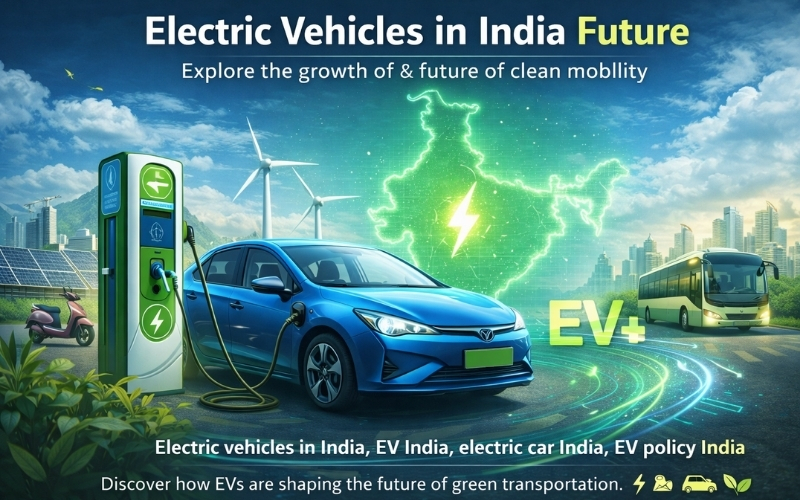
India is rapidly moving toward a cleaner and more sustainable transportation system, and Electric Vehicles (EVs) are at the center of this transformation. With increasing concerns about air pollution, rising fuel prices, and climate change, the shift from conventional fuel-powered vehicles to electric mobility is becoming more important than ever. Electric vehicles offer an eco-friendly, efficient, and cost-effective solution that can help reshape the future of transportation in India.
What Are Electric Vehicles?
Electric Vehicles are automobiles powered by electricity instead of traditional fuels like petrol or diesel. They use rechargeable batteries and electric motors to run. EVs produce zero tailpipe emissions, which significantly reduces air pollution and greenhouse gas emissions. They are also quieter, require less maintenance, and have lower operating costs compared to internal combustion engine vehicles.
Growth of Electric Vehicles in India
India has witnessed a significant rise in EV adoption over the past few years. The government, private companies, and consumers are increasingly supporting electric mobility. Cities with high pollution levels, such as Delhi, Mumbai, and Bengaluru, are encouraging EV adoption through policies and incentives.
Several Indian and global automobile companies are investing heavily in electric vehicle manufacturing and innovation. Electric two-wheelers, three-wheelers, cars, and buses are gradually becoming more common on Indian roads. The growing availability of charging stations and improved battery technology is also accelerating this transition.
Government Initiatives Supporting EV Adoption
The Government of India has introduced multiple initiatives to promote electric mobility across the country. One of the key programs is the Faster Adoption and Manufacturing of Electric Vehicles (FAME) scheme, which provides subsidies and incentives to both manufacturers and buyers.
Other initiatives include:
- Tax benefits and reduced GST on EVs
- Financial incentives for EV manufacturers
- Development of nationwide charging infrastructure
- State-level EV policies encouraging electric mobility
These initiatives aim to make electric vehicles more affordable and accessible to the general public.
Benefits of Electric Vehicles
1. Environmental Benefits
Electric vehicles produce zero tailpipe emissions, which helps reduce air pollution and carbon emissions. This plays a crucial role in improving air quality in Indian cities.
2. Lower Running Costs
Electricity is cheaper than petrol or diesel, making EVs more economical to operate. EV owners can save significantly on fuel expenses over time.
3. Reduced Maintenance
EVs have fewer moving parts compared to conventional vehicles, which means lower maintenance costs and fewer mechanical issues.
4. Energy Security
By reducing dependence on imported fossil fuels, EV adoption can strengthen India’s energy security and support domestic energy sources like renewable electricity.
Challenges Facing Electric Vehicles in India
Despite the growing popularity of EVs, several challenges still need to be addressed.
Limited Charging Infrastructure
Although charging stations are increasing, they are still not as widespread as traditional fuel stations.
High Initial Cost
Electric vehicles often have a higher upfront price compared to conventional vehicles, mainly due to battery costs.
Battery Technology
Battery performance, charging time, and recycling are important areas that require further technological development.
The Future of Electric Mobility in India
The future of electric vehicles in India looks promising. With advancements in battery technology, increased government support, and growing consumer awareness, EV adoption is expected to grow significantly in the coming years.
India has also set ambitious goals to increase the share of electric vehicles in its transportation system. The integration of renewable energy with EV charging infrastructure can further enhance sustainability and reduce carbon emissions.
In the coming decade, electric mobility is likely to become a mainstream transportation solution, transforming the way people travel while contributing to a cleaner and greener environment.
Conclusion
Electric vehicles represent a major step toward sustainable development and environmental protection in India. As technology continues to evolve and infrastructure expands, EVs will play a critical role in reducing pollution, lowering fuel dependency, and building a sustainable future. By embracing electric mobility today, India can move closer to achieving its climate goals and ensuring a healthier environment for future generations.
