
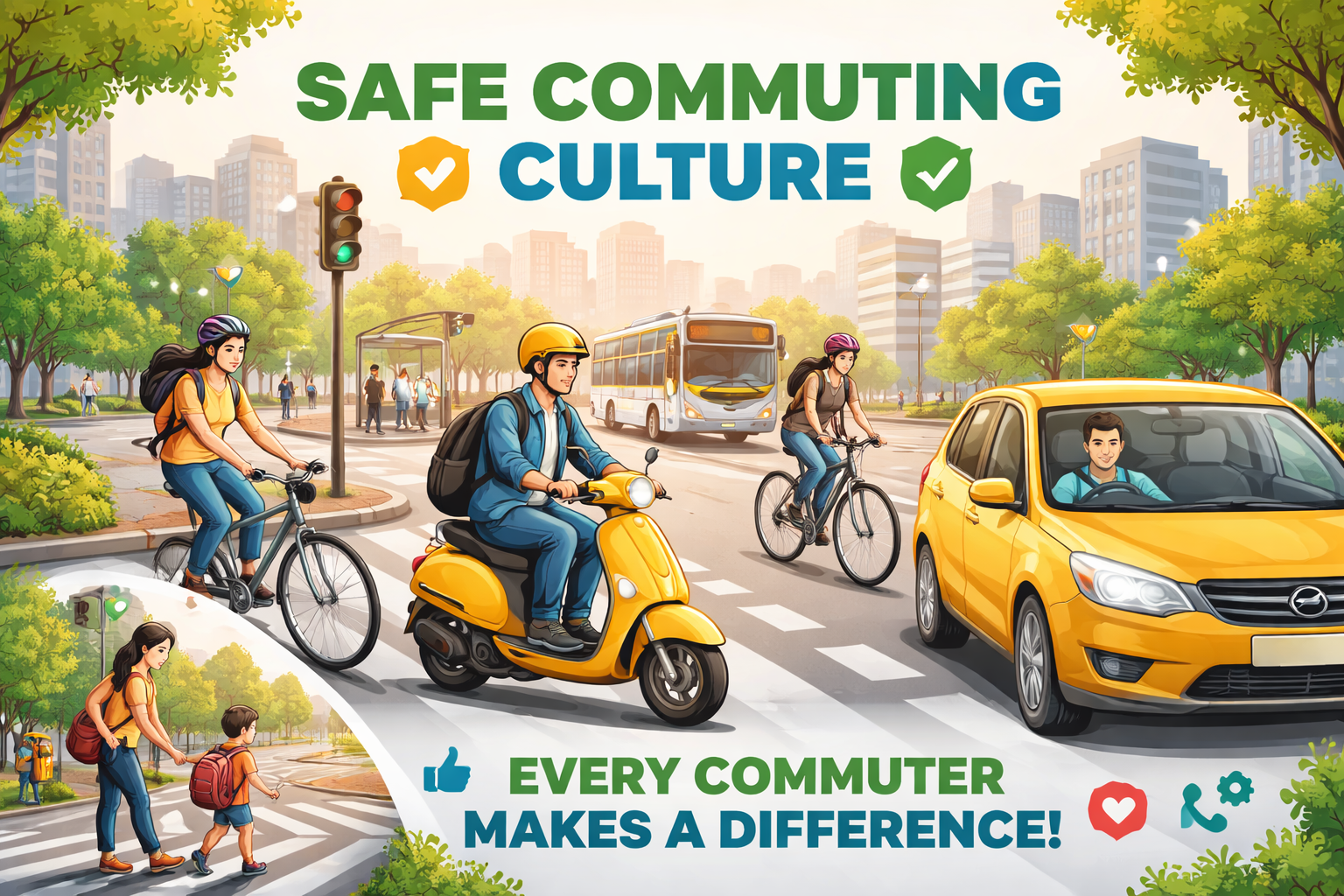
In today’s fast-paced world, commuting has become an essential part of our daily lives. Whether traveling to work, school, or running errands, millions of people take to the roads every day. However, with increasing traffic and urbanization, road safety has become a critical concern. Creating a safe commuting culture is no longer optional—it is a shared responsibility that requires awareness, discipline, and collective action.
Why Safe Commuting Culture Matters
A safe commuting culture goes beyond simply following traffic rules. It reflects a mindset where every commuter prioritizes safety—not just for themselves, but for everyone on the road. Accidents often occur due to negligence, distractions, or lack of awareness. Simple habits like overspeeding, using mobile phones while driving, or ignoring signals can have life-threatening consequences.
When individuals adopt responsible commuting behaviors, it significantly reduces accidents, saves lives, and builds a more organized and stress-free traffic environment. A strong safety culture also reduces the burden on healthcare systems and contributes to overall societal well-being.
The Role of Individual Responsibility
Every responsible commuter plays a vital role in shaping safer roads. Whether you are a driver, cyclist, or pedestrian, your actions matter. Wearing helmets and seatbelts, following speed limits, maintaining lane discipline, and staying alert are basic yet powerful practices.
Avoiding distractions is equally important. Mobile phones, loud music, and multitasking while driving can reduce reaction time and increase risks. Defensive driving—anticipating potential hazards and being prepared to respond—is a key skill that every commuter should develop.
Pedestrians also have a role to play by using designated crossings, avoiding jaywalking, and staying attentive while walking near roads. When everyone follows these simple practices, the cumulative impact is significant.
Community and Organizational Efforts
While individual responsibility is crucial, communities and organizations play an equally important role in promoting safe commuting. Awareness campaigns, safety workshops, and educational programs can help instill responsible behavior among people of all age groups.
Organizations like Global Energy & Environment Foundation are actively working towards building awareness around safety, sustainability, and responsible practices. By encouraging individuals and institutions to adopt safer habits, they are helping create a culture where safety becomes a priority rather than an afterthought.
Schools, colleges, and workplaces can also contribute by conducting regular safety sessions, encouraging carpooling, and promoting eco-friendly and safe transportation options.
Technology and Infrastructure
Modern technology has significantly improved road safety. Features like traffic monitoring systems, smart signals, GPS navigation, and driver-assist technologies help reduce human errors. However, technology alone cannot ensure safety unless it is supported by responsible behavior.
Infrastructure also plays a vital role. Well-maintained roads, clear signage, pedestrian crossings, cycling lanes, and proper lighting can make commuting safer. Governments and urban planners must prioritize these aspects while designing transportation systems.
Building a Culture of Awareness
Creating a safe commuting culture starts with awareness. Social media, community programs, and public campaigns can spread important safety messages quickly and effectively. When people see others practicing safe habits, it creates a ripple effect, encouraging more individuals to follow suit.
Parents and educators can instill safety values in children from an early age, ensuring that future generations grow up with a strong sense of responsibility on the roads.
The Environmental Connection
Safe commuting is closely linked to environmental sustainability. Practices like carpooling, using public transport, cycling, and walking not only reduce traffic congestion but also lower carbon emissions. A safer commuting culture often aligns with greener choices, contributing to a healthier planet.
By combining safety with sustainability, communities can create transportation systems that are both efficient and environmentally friendly.
Challenges and the Way Forward
Despite awareness efforts, challenges remain. Rapid urbanization, increasing vehicle numbers, and lack of strict enforcement of traffic laws continue to pose risks. Changing human behavior is not easy, but consistent efforts, education, and strict regulations can bring long-term improvements.
Collaboration between governments, organizations, and citizens is essential. Policies must be enforced effectively, and individuals must take personal responsibility for their actions.
Conclusion
A safe commuting culture is built one action at a time. Every responsible choice—wearing a helmet, following signals, staying alert—contributes to safer roads and stronger communities. When safety becomes a habit rather than a rule, the impact is long-lasting and transformative.
If you want to learn more about safety, sustainability, and responsible practices, and be part of meaningful change, you can join the GEEF Summit.
👉 https://www.g-eef.org/energyleadersummit26.html
CTA: Share awareness and be a part of the movement toward safer communities.
